Here at Bushmans, we offer an extensive range of tank storage solutions for various applications and settings. Our Aqualine steel liner tank capacities range from 20,000L to 360,000L, offering various size solutions for bushfire and drought preparedness, to everyday drinking water.
While we pride ourselves in providing high-quality steel liner tanks, it is still crucial to follow the required warranty conditions that come with the tank purchase. Regular tank maintenance is simple to manage and doesn’t take up a huge chunk of your time. In fact, doing this not only ensures a longer lasting tank, but it keeps your warranty valid.
To guide you, we’ve put together a brief guide on what to maintain, how to maintain, and most importantly, why it’s important to maintain your Aqualine steel liner tank.
Leaf Strainer Check
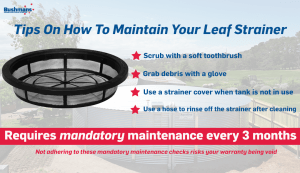

Leaf strainers are designed to prevent the entrance of any debris (such as leaf litter) and vermin (such as rodents, insects, birds) from entering the tank.
A leaf strainer check is required every 3 months. An ideal time to do one of these checks would be towards late autumn to prevent any clogging before the winter rain increases. Another ideal time for a leaf strainer check is early-mid spring to get rid of any debris from the wetter seasons. If you’re in a bush-fire prone area, we recommend you do an additional check before summer hits to make sure there’s no buildup of dry debris that could become a potential fire hazard.
It is, however, up to you when to do these checks as each location variables differ. With that in mind, not doing these crucial leaf strainer checks can cause an array of issues, including;
- Blocked Inlets – A clogged strainer can cause water to overflow and leak down the side of the tank – which can then lead to rust and therefore void the warranty
- Contaminated Water – If you do not clean your strainer as required, you will likely run into issues of contamination, which can cause potential health issues. Water contamination affects water quality, causing foul odours and potential harmful bacterial growth
- Structural Damage – A blocked strainer can cause a backflow of water back into the pipe/gutter system, which then leads to overflow issues such as leaks and further damage
Maintaining the 400mm Blue Metal/Aggregate Base


A compacted aggregate base plays a critical role in holding your steel liner tank firmly in its place. Just as importantly, this base provides consistent support to the tank’s internal liner (think of it as a waterproof membrane). This ensures that the water collected in the tank remains clean, and uncontaminated.
One of the main things that can cause issues and void your warranty is vegetation growth. It is important to ensure that no vegetation of any kind grows through the compacted aggregate base around your tank.
Roots can compromise the tank’s foundation, leading to shifting or uneven settling, both of which can impact the tank’s stability. Even more critically, root intrusion can cause the internal liner to move out of place. If this happens, it may not only damage the tank but also affect the quality and safety of the stored water.
Maintaining the base is required every month. To maintain the base, you should be walking around the tank and look for;
- Any debris, such as leaves, dirt or mulch around the tank – Be sure to sweep this buildup away from the tank, as this debris can cause moisture and can rust the tank
- Weeds or grass growing around the tank – You can get rid of these by pulling them out before they grow any deeper, or by carefully using herbicides (glyphosate spray). If none of these solutions work, you can lay a weed mat
- Dips or holes – If this occurs, you can shovel in 10-20mm blue metal or aggregate by compacting it lightly with a rake or by hand
Keep Overflow Directed Away from the Tank and Overflow Screen Clean
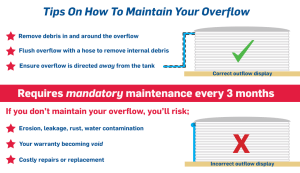
In simple terms, the overflow on your steel liner tank is an outlet designed to prevent the tank from overfilling. Its function is to safely direct excess liquid away once the tank reaches a certain level, protecting the tank and surrounding area from damage caused by spillage or pressure build-up.
The overflow screen prevents hazardous debris from entering the tank (similar to the leaf strainers purpose), and lets water out when the tank gets full.
An overflow outlet and overflow screen check is required every three months.
It is crucial to ensure overflows and overflow screens are kept clear at all times. If an overflow pipe is blocked, it can cause a plethora of issues, including;
Overflow outlets should be piped away from the tank base to prevent water from running down the tank walls. If an overflow outlet is not piped correctly, this will cause corrosion and will therefore void warranty coverage for your tank. To maintain your tanks overflow inspect the overflow outlet thoroughly by;
- Removing any debris in or around the overflow outlet and overflow screen. Leaves, dirt and twigs are the most common debris you will find. However, spider webs and nests can also occur – so it is best to do this check with caution
- Flush the overflow pipe with a garden hose to remove internal blockages, and clean the overflow screen
- Check that the overflow directs water safely away from the tank base and foundation
To clean your overflow screen, you’ll need to;
- Remove as much debris build up before removing the overflow screen (this is to ensure debris doesn’t get stuck or seep into the pipe/tank)
- Once you have removed the bulk of debris build up, carefully remove the overflow screen
- Rinse the overflow screen with a hose, and inspect for any remaining debris, and any damage. You can get rid of this remaining debris by gently scrubbing the screen with a soft toothbrush or a soft bristle brush with warm soapy water or a disinfectant
- If there is heavier, stubborn build up stuck on the screen (such as algae or sludge) you can soak the screen in a vinegar or bi-carb solution
- Give the screen another scrub, rinse and wait for the screen to dry fully
- Once the screen is fully dry, ensure you put it back correctly (this is crucial, as not putting it back on properly can cause issues)

If for whatever reason the overflow pipe has any damage (such as cracks, sagging or it becomes loose) the pipe must be fixed immediately. If this is not fixed, it can cause more damage to the tank and nearby structures. It is best to use the correct materials (such as pipe sealants or teflon/plumbers tape) and refrain from using items like super glue, sticky tape, cling wrap or towels.
Warranty Reminder
Regular maintenance checks are essential to keep your Aqualine steel tank warranty valid. Not adhering to these required inspection and maintenance procedures could lead to the voiding of your warranty.
We strongly recommend;
- Setting a reminder on your phone, tablet, desktop, laptop or smart home device
- Writing a reminder in your planner, calendar or diary
- Print or copy the maintenance checklist provided, and tick it off as you go
- Bring your organic bin with you to discard debris
- Bring a pair of gloves and relevant cleaning equipment (such as a bucket of warm soapy water, soft brush etc)
- Wear enclosed shoes when conducting your checks
- If possible, avoid doing these checks in extreme weather conditions (such as during heavy rain)
The purpose of this blog is to ensure that you understand why these checks are required, and what actions you need to take. For more detailed support, you can download the Aqualine Maintenance Checklist here, or you can contact the Bushmans team.