In our daily lives, water is an essential everyday resource used for drinking, cooking, washing and cleaning. Beyond everyday household usage, water in community spaces also plays a crucial role in keeping the likes of parks, vegetation, habitats and sports fields maintained.
Water resources are vital in keeping critical sectors such as hospitals, emergency services, educational settings, and local businesses to function. Water sources like rivers, lakes, wetlands and oceans are home to thousands of aquatic life species, and can serve as an alternative source of energy (hydropower).
In Australia’s case, climate conditions have caused a ripple effect in water scarcity due to natural disasters like bushfires, severe droughts and flooding – all of which has impacted the likes of water infrastructure systems, water health, ecosystems & food supply. Now more than ever, it is crucial that all Australians play their part however they can to help preserve this precious resource. Whether it’s switching to a more eco friendly appliance or using a rainwater tank instead of mains, every drop matters.
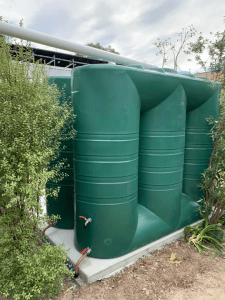

Understanding common water usage and appliances can help save a number of water resources, ecosystems & water bill costs. Here’s a breakdown of what you need to know, and how you can play your part in your home and local community;
Household Water Usage
Bathroom
Showers
On average, showers typically use between 9L – 12L of water per minute. By using a water-saving showerhead, you can cut your shower water usage to as low as 6L-7L per minute instead. Taking shorter showers will also reduce water bill costs – even by reducing a 7 minute shower to a 4 minute shower can save around 24 litres of water per use.
Baths
While showers are more frequently used, bathtubs are still quite common in households. Regardless of the frequency, baths on average can use around 95 litres of water when filled fully for one time use, though this figure can of course vary depending on the length and width of the bath. To save water while bathing, installing single-lever mixer tap allows for quicker and precise control to adjust the water temperature. You can also consider reusing bathwater (provided products used in the bath are environmentally friendly) for things like watering the lawn or cleaning the driveway.
Bathroom Taps
Using single-lever mixer taps in your bathroom can significantly reduce water wastage. As mentioned above, single-lever mixer taps are much faster to adjust water temperatures, and reduces fewer leakage issues compared to traditional two-handle taps.
Toilets
Dual flush toilets save water by providing two flush options, as opposed to traditional toilets that uses one flush button and uses the same water usage each time. With dual flush toilets, this allows the option to use less water for liquid waste that does not require a full flush. If you are unable to replace or upgrade your toilet to a more modern water-efficient model, you can alternatively buy a conversion kit to add a dual flush option to your existing toilet.
Handy tips to know: WELS Star Ratings (Water Efficiency Labelling and Standards) is an important indicator of a products water efficiency. The higher a star rating is, the more water efficient it is compared to lower star rated products. Prices and brands can vary, so it is best to research, compare and shop around to find the best one for your space.
Laundry
Washing Machines
While it can depend on your laundry space, set up and accessibility, front-load washing machines compared to top-load washing machines are much more water efficient, and uses significantly less water. For comparison, front-load washing machines typically use 60% less energy compared to top-load washing machines.
- Front-load washing machines: Uses an average of 56L – 60L of water per cycle
- Top-load washing machine: Uses an average of 110L – 120L of water per cycle
Laundry Sink Taps
Laundry sinks are typically multi purpose used for soaking, rinsing and filling up cleaning tools (mop buckets, spray mops etc). For a laundry, a pull-down or a pull-out spout (depending what is most suitable for your space) is ideal for better precision, control and multi-function use to reduce water waste compared to using traditional laundry sink taps.
- Traditional laundry sink taps: Uses around 8L – 16L per minute
- Pull-down/pull-out spouts: Uses between 6L – 9L per minute
Handy tips to know: Fix leaks as soon as possible! In the meantime if it is safe and accessible for you to do so, use a water bucket to catch the leaking water while waiting for repairs
Kitchen
Dishwashers
Dishwashers have grown in popularity as a modern, convenient household appliance in Australian homes. Overtime, dishwashers have become increasingly water efficient compared to the traditional sink and tap method. While model, brand and load size can vary, modern dishwashers use around 6L-12L of water per cycle, as opposed to hand washing with a running tap or hand washing with a filled sink. For an average, estimated comparison;
- Modern dishwashers: On average uses around 6L-12L of water per cycle (you can maximise water efficiency even further by washing with a full load)
- Hand washing with the tap running: Leaving the tap running while washing dishes can use around 8.3L of water per minute
- Hand washing with the sink full: On average, a kitchen sink typically holds 15L – 45L, though this can vary depending on the size & width. To maximise water efficiently with this method, you can instead fill the sink halfway, rather than filling it up fully or leaving the tap running
Kitchen Sink Taps
While using a dishwasher reduces your kitchen sink usage, there are still other things to account for such as washing fruits, vegetables, hand wash items, thawing/rinsing food, and dishes that may not fit in the dishwasher. Ideally, mixer & spout taps are a considerably better substitute than traditional 2 tap setups. Both spout and mixer taps use around the same amount water, using around 6L-9L per minute – making both an excellent water efficient appliance.
- Spout Taps: Best for more precision and targeted rinsing, especially on larger or awkward dishes to wash
- Mixer Taps: More suitable for general use, ideal for those who may need a more accessible method
Filtered Drinking Water Tap/Dispenser
Depending on your location, using a rainwater tank may be the most sufficient way to use water in the home rather than relying on mains. Rather than buying bottled water, a filtered tap or fridge water dispenser can save you hundreds of dollars per year. On top of that, by using a rainwater tank for your drinking water can save you even more, and can reduce pressure on local water infrastructure systems.
Please note that even though Bushmans tanks are safe to use are is BPA free & food grade certified, we still highly recommend using a filter if you intend on consuming water from your rainwater tank.
Handy tips to know: Rather than pouring excess boiling water down the sink, you can reuse that boiling water (once it’s cooled) to water the garden instead

Outdoor
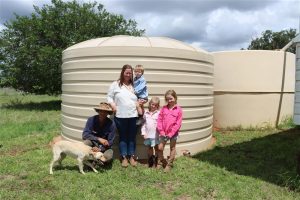
Rainwater tanks can be connected and used for a range of outdoor appliances such as;
- Outdoor Taps & Sinks – It is best to use a mixer tap or a spout (depending on what you want to use it for) for outdoor sinks
- Hoses & Pressure washers – For best water efficiency, use hoses with trigger nozzles or a pressure washer. Most pressure washers for home use are portable and lightweight
- Irrigation & Sprinklers – Depending on the size of your lawn and garden, there are a number of water efficient irrigation systems and sprinklers. Drip irrigation systems for example, can reduce water usage by up to 50% compared to traditional methods
- Pools & Spas – Using a pump with a rainwater tank can deliver water much more efficiently to pools and spas – making filling easier while helping conserving local water resources (especially during dry seasons)
Depending on your set up and number of rainwater tanks, you can also install taps & pumps that can further maximise water efficiency, convenience and dollar value.
Household Water Uses
| Household Water Uses | Estimated Water Usage (Litres) | Estimated Water Usage (Imperial Gallons) |
| Dishwashers | 10-15L per cycle | 2.2 – 3.3G |
| Kitchen Sink Taps | 6-10L per minute | 1.3 – 2.2G |
| Washing Machine (top load) | 150-180L per load | 33 – 40G |
| Laundry Sink Taps | 6-10L per minute | 1.3 – 2.2G |
| Showers | 8 – 12L per minute | 1.8 – 2.6G |
| Baths | 80-100L per bath | 17.6 – 22G |
| Bathroom Sink Taps | 6-10L per minute | 1.3 – 22G |
| Toilets (full flush) | 11-13L per flush | 2.4-2.9G |
| Toilets (half flush) | 4-6L per flush | 0.9 – 1.3G |
| Filter Drinking Water Tap | 2 – 3L per glass (250ml) | 0.4 – 0.6G |
| Outdoor Taps | 15-20L per minute | 3.3-4.4G |
| Outdoor Sinks | 6-10L per minute | 1.3 – 2.2G |
| Hoses, Irrigation, Sprinklers | 15-20L per minute | 3.3 – 4.4G |
| Pressure Washes | 10-15L per minute | 2.2 – 3.3G |
| Pools & Spas | 100-200L per hour (top up) | 22 – 44G |
| Washing Machine (front load) | 50-80L per load | 11 – 18G |
| Garden features (ponds, fountains) | 10-20L per hour | 2.2 – 4.4G |
| Pull-down/Pull-out spouts taps | 6L-9L per minute | 1 – 2G |
Community spaces & public facilities
For communities and public facilities, water conservation strategies can include using treated wastewater, stormwater, bore water and rainwater harvesting systems. Unlike households, community facilities typically require larger storage tanks, and must adhere to local council and state water management guidelines.
Facilities like health and emergency services are also required to have backup water systems in the event of;
- Leaks, grid or supply disruptions
- Power outages
- Natural disasters
- Contamination
Among natural disasters that strike the country simultaneously that disrupt water sources & systems, water conservation now more than ever is crucial to ensure the likes of local communities and public facilities have access to water. Saving Australia’s water and protecting ecosystems, while reducing costs, can be done without compromising safety and guidelines. Below are a few examples of ways your local community can play its part.

Sports Fields
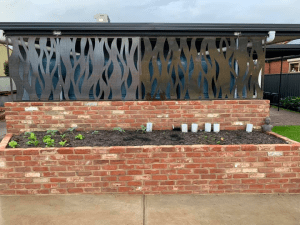
Using traditional methods like hoses or flood irrigation for larger patches of grass, such as a sports pitch, wastes a large volume of water per use and can have inconsistent coverage. For a much more water efficient solution, modern methods for maintaining a green field can include drip irrigation systems, smart sprinklers and rainwater tanks. That way, water is used when and where it’s needed while remaining environmentally friendly.
Beach facilities
As most Australians would likely know when heading down to the beach for a swim, sand and seaweed debris can get everywhere. Most beaches are equipped with showers or taps to rinse off, and while not mandatory, having these facilities can help promote hygiene and overall improve the visitors experience. To ensure minimal water waste and less reliance on mains, the best water efficiency methods for beach showers and taps can include timed or push button showers that can reduce water use by 50-70% , compared to a traditional beach shower, which can use 10-15L of water per minute.
To give a bit more of an idea, we’ve put together a table below of estimated water usage commonly used in public spaces;
Community Water Uses
| Community Water Uses | Estimated Water Usage (Litres) | Estimated Water Usage (Imperial Gallons) |
| Sports Field Irrigation System (e.g soccer pitch or AFL field) | 300 – 600 per hour (per hectare) | 66 – 132G |
| Outdoor Drinking Fountains | 1-3L per minute | 0.2 – 0.6G |
| Public Garden Fountains/Waterfalls | 20 – 50L per hour | 4.4 – 11G |
| Gym/Fitness Centre Showers | 40 – 60L per shower (6 – 10 min) | 8.8 – 13.2G |
| Picnic/BBQ Stations | 6 – 9 L per minute | 1.3 – 2.0G |
| Public Toilets (Full Flush) | 6 – 9L per flush | 1.3 – 2.0G |
| Public Toilets (Half Flush) | 3 – 4L per flush | 0.7 – .09G |
| Dog Parks / Pet Washing Stations | 15 – 25L per use | 3.3 – 5.5G |
| Emergency Wash Stations/ Fire Fighting Systems | 200 – 400L per hour | 44 – 88G |
| Public Beach Showers | 18 – 45L per use | 3.96 – 9.9G |
| | |
Water-Saving Tips
While household, community and facility requirements may vary due to guidelines or location, here’s a brief summary of some of the ways you can reduce your water bills and carbon footprint- all while saving Australia’s water, the environment and your local community;
- Install rainwater tanks instead of using and relying on mains
- Use the Bushmans rainwater tank calculator to find the best rainwater tank for your space
- Check with your local council or state governments website to see which rebates you may be eligible for in your area
- Choose higher rated star water-efficient appliances (WELS rated)
- Consider xeriscaping methods (such as drought-tolerant plants & mulch for the garden)
- Use smart irrigation systems and/or smart water devices to monitor water levels (particularly if you are in a rural or remote area)
- Wash with full loads only, and turn off any taps when you’re not using them
- Fixs leaks promptly. If it is safe and accessible to do so, use a water bucket to catch the leaking water while waiting for repairs


Play Your Part In Water Conservation
Start your water-saving journey by installing a water tank – the foundation for lowering costs, reducing water waste, and making every drop count! Whether you’re ready to press go or are still searching around, we highly recommend using our Bushmans water tank calculator to help recommend the best tank for your space (tanks from 660L – 10,000L can also be purchased online via our webshop)
Check out our entire poly tank range here:
We also offer steel liner tanks for rural firefighting & commercial firefighting tanks
If you’re interested or have any questions, feel free to call us on 1800 008 888, or fill in our contact form – we’re here to help!