What Is Better for Water Tanks: Poly or Steel?
Choosing between poly and steel water tanks depends on your property, water requirements and environment. Both options provide reliable water storage, but they are designed for different applications.
Polyethylene tanks are lightweight, corrosion-resistant and ideal for homes, coastal properties and smaller rural sites. Steel water tanks offer larger storage capacity, high structural strength and are commonly used for farms, industrial sites and areas requiring bushfire resilience.
The best choice depends on factors such as required capacity, site access, climate conditions and how you plan to use your stored water.
In this guide, we compare poly vs steel water tanks across durability, maintenance, lifespan, installation and suitability.
Quick Answer: Are Poly or Steel Water Tanks Better?
For most residential properties, poly water tanks are the better choice because they offer excellent durability, zero rust risk and easy installation.
For large-scale water storage, farms, industrial sites or bushfire-prone areas, steel water tanks may be the better option due to their larger capacity and structural strength.
Neither material is universally better — the right choice depends on your site.
Polyethylene Tanks: Lightweight, Durable Water Storage
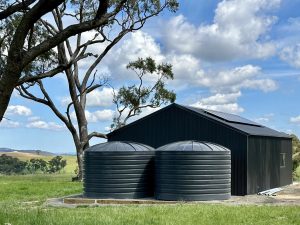

Polyethylene tanks have become one of Australia’s most popular choices for water storage tanks. Made from high-quality, food-grade polyethylene, these tanks are built to withstand some of Australia’s harshest conditions.
The Advantages of Poly Water Tanks
Corrosion and Rust Resistance
Unlike traditional steel, polyethylene tanks do not rust or corrode. This makes poly tanks an excellent choice for coastal properties where salt spray can cause corrosion over time.
Seamless Construction
Many polyethylene tanks are manufactured using a rotational moulding process, creating a single-piece tank without joins or weak points. This helps reduce the chance of leaks and improves long-term storage tank durability.
UV Protection
A common misconception is that plastic tanks become brittle or degrade quickly in the Australian sun. Modern polyethylene tanks use UV stabilisers to protect the material from long-term sun exposure.
Lightweight and Easy Installation
Poly tanks are significantly lighter than steel or concrete alternatives. This makes transport, delivery and positioning much easier, particularly where heavy machinery or cranes may not be suitable.
Safe Drinking Water Storage
Food-grade polyethylene tanks are designed for safe water storage and can be suitable for potable water applications. However, filtration is recommended if you plan to drink rainwater collected from your tank.
Limitations of Poly Water Tanks
Size Restrictions
Poly water tanks are available in a wide range of sizes, but they are generally more suited to residential, commercial and smaller rural applications.
For very large-scale water storage requirements, multiple poly tanks may be needed or a larger steel solution may be more suitable.
Bushfire Considerations
While polyethylene tanks are difficult to ignite, they can be more vulnerable to extreme heat during bushfires if they are not protected or maintained full of water.
Best Uses for Poly Water Tanks
Polyethylene tanks are ideal for:
- Residential homes collecting rainwater
- Townhouses and properties with limited space
- Coastal properties
- Small businesses
- Hobby farms
- Off-grid properties
- Emergency water storage
- Schools and community spaces
- Properties requiring slimline or modular tank options
Steel Water Tanks: High-Capacity Storage Solutions
Steel water tanks are designed for applications where large storage volumes, structural strength and long-term capacity are the priority.
These tanks are constructed using a galvanised steel shell combined with a strong internal liner, creating a durable solution for demanding environments. Check our Steel Tank range.


The Advantages of Steel Water Tanks
Large Storage Capacity
Steel tanks are the preferred choice when large volumes of water are required. They are commonly used for agricultural, commercial and industrial applications where thousands or hundreds of thousands of litres are needed. Bushmans Aqualine Steel Tanks are designed from 20,000L up to 360,000L.
Bushfire Resilience
Steel is a non-combustible material, making steel tanks a popular option in bushfire-prone areas. Check our Firefighting Steel Tank range.
They can also be fitted with specialised fire connections to allow emergency water access when required.
Structural Strength
Steel water tanks provide excellent structural integrity and can be engineered for challenging environments, including high wind and cyclone regions.
Flexible Installation
Unlike pre-manufactured tanks, steel tanks can be built onsite from panels. This makes them suitable for properties with restricted access, narrow gates or difficult installation locations.
Limitations of Steel Water Tanks
Higher Initial Cost
Steel tanks generally require more materials and professional onsite installation, making the upfront investment higher compared to many poly options.
Potential Corrosion
While galvanised steel provides protection, steel tanks may require maintenance over time, especially in highly corrosive environments such as coastal or industrial areas.
Best Uses for Steel Water Tanks
Steel water tanks are ideal for:
- Large-scale farming operations
- Irrigation and crop applications
- Commercial vineyards
- Livestock properties
- Industrial facilities
- Warehouses capturing large roof runoff
- Government infrastructure
- Large rural properties
- Bushfire-prone locations
- Sites requiring very large water storage capacity
Poly vs Steel Water Tanks Comparison
| Feature | Poly Water Tanks | Steel Water Tanks |
|---|
| Material | Polyethylene | Galvanised steel with liner |
| Best suited for | Homes, small farms, coastal areas | Farms, industrial and large rural sites |
| Corrosion resistance | Excellent | Requires maintenance |
| Capacity | Small to medium storage | Large-scale storage |
| Installation | Delivered and positioned | Built onsite |
| Weight | Lightweight | Heavy-duty structure |
| Maintenance | Low maintenance | Periodic inspection recommended |
| Durability | Excellent in most environments | Excellent for high-capacity applications |
Choosing Between Different Water Tank Materials
Every Australian property has different requirements. When comparing water tank materials, consider these key factors.
How Much Water Storage Do You Need?
It is easy to underestimate your water requirements.
Whether you are supplying a household, livestock, irrigation system or commercial site, understanding your peak water usage is essential.
Use the Bushmans Water Tank Calculator to estimate your storage requirements based on your location, rainfall and intended usage.
What Are Your Local Requirements?
Depending on your location, councils may have requirements relating to:
- Firefighting reserves
- Tank placement
- Tank height restrictions
- Approved materials for new builds
Check your local council requirements before selecting your tank.
You can also review Bushmans Australian Water Tank Regulations: State-by-State Guide.
What Is Your Site Access Like?
Site access plays an important role in your decision.
A poly tank arrives as a complete unit and requires suitable delivery access.
A steel tank is built onsite from panels, making it a more flexible option for restricted-access properties.
What Weather Conditions Does Your Property Experience?
Your environment will influence the best choice.
For coastal properties, corrosion resistance is often a priority.
For bushfire-prone areas, structural resilience and non-combustible materials may be more important.
Frequently Asked Questions
Are poly tanks better than steel tanks?
Poly tanks are generally better for residential properties because they are lightweight, corrosion-resistant and easy to install. Steel tanks are better suited to large-scale water storage applications.
How long do polyethylene tanks last?
Quality polyethylene tanks can provide decades of reliable service when installed correctly and maintained properly.
Do steel water tanks rust?
Steel tanks are designed with protective coatings and liners, but corrosion can occur over time depending on environmental conditions and maintenance.
Which tank material is best for drinking water?
Both polyethylene and steel tanks can be suitable for drinking water storage when they are manufactured and certified for potable water use.
Which water tank is best for bushfire areas?
Steel water tanks are often preferred for bushfire-prone locations due to their non-combustible properties and structural strength.
Find the Right Water Storage Solution
Choosing the right tank comes down to your property, environment and water requirements.
Whether you need a compact residential tank or a large-capacity storage solution, the right water storage tank can provide reliable supply for years to come.
Talk to Bushmans team today to find the best solution for your site 1800 008 888.