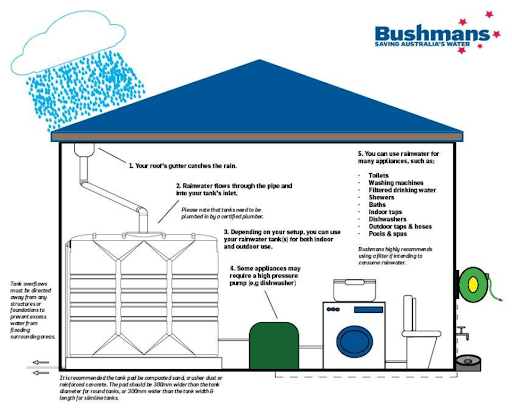
How rainwater tanks work is simple. They work by capturing rain from your roof, filtering it, storing it in a tank, and using a pump/pressure system to deliver the water to garden taps, toilets, or washing machines. Any overflow is directed to the stormwater drain, and many systems include a mains backup.
- Collection: rain falls on the roof, which acts as the primary catchment area.
- Conveyance: gutters and downpipes channel the water from the roof toward the tank inlet.
- Filtration and first-flush: water passes through leaf strainers, mesh screens, or a first-flush diverter to remove leaves, sediment, and roof debris before entering the tank.
- Storage: once it has passed through the water filter, the filtered water is stored in the tank. Options include polyethylene slimline water tanks and larger capacity models. Tanks can sit above or partly below ground and have inlet strainers and overflow outlets.
- Distribution and pressure: a water pump draws water from the tank, and a pressure tank or pump controller maintains a steady supply pressure to the fixtures inside the home.
- Overflow and mains backup: when the tank is full, excess water discharges to stormwater; many systems include an automatic mains top-up so the indoor supply continues if the tank runs low.

Maintenance and Use of Rainwater Tanks
Rainwater tank maintenance should start with clearing gutters and filters regularly. Inspect inlet strainers monthly, remove roof debris after storms, and check overflows and seals to prevent blockages. Regular maintenance reduces sediment and algae, improves water quality, and extends the life of pumps and fittings.
Bushmans’ offers Australian-made, UV-stabilised poly tanks built for harsh conditions and backed by a long guarantee, giving you reliable storage and long service life. Ready to size a tank for your property? Contact us for a quote and to learn more about how rainwater tanks work.


